
The olive harvest is an exciting time in Italy, especially in Lucca which is world-famous for its delicious Extra Virgin Olive Oil. It is the topic of conversation in the café’s from when people drink their morning cappuccino to when they stop in for an aperitivo in the evening. How are your olives this year? Olives tend to have alternating plentiful and low production years. Production can also depend on whether there was a heat wave during the flowering phase of olive production—this can cause the flowers to dry and fall off, thereby decreasing olive formation. Do you think it is going to rain? Too much rain can plump up the olives with water and possibly contribute to olives falling off the trees. And the big question as we pass through October and November…when are you harvesting? The longer you leave the olives on the tree, the higher yield of olive oil you will get from the olives. It is a precarious waiting game as there are also risks to leaving the olives on the tree too long such as the olives becoming over-ripe and falling from the tree, the softer ripe olives being more susceptible to insects being able to penetrate the fruit and too much rain as the season nears winter. As you travel through the hills of Tuscany, you pass through many microclimates and these small differences in temperature and humidity affect when the harvest is best. As I go for my morning walks, I note the olive groves in our neighborhood that are starting to lay their nets in preparation for the harvest and report back to my husband. Should we start?

Are they ready for harvest?
The first step in harvesting is booking your appointment at the olive mill. These impressive facilities lie dormant all year waiting for the harvest, then work 22 hours per day during the harvest season as everyone jumps on the “perfect” time to harvest. There are several mills to choose from and everyone has their favorite method (stone milled or modern machines) and mill. Your appointment may be at 2 am but you are excited to get your appointment nonetheless.
On harvest day you just want to run out to the grove and start running your fingers through the branches laden with the ripe olives but the first step is to net the trees. This involves laying down nets underneath the trees making sure to overlap them and tie them closely to the trunks of each tree. This way you can liberate the olives without thought of collecting them until the end when it is easy to round them up by lifting one side and slowly making a pile that goes into the boxes. But be careful not to tread on the olives while you are working!

Netting the trees…
Olives can be picked by hand or with an electric picker on a long stick usually connected to a car battery. Usually, a combination is used with most of the family picking the lower branches by hand and one strong member using the electric picker to get to the tops of the trees. Either way, your arms are above your head all day and you are walking up and down the slope making you hungry for lunch and ready to flop into bed at the end of the day. Convincing yourself to get back to work the next morning requires an extra espresso!

Handpicking the lower branches

The strong one uses the electric olive picker to reach the high branches
It is a good feeling when all of the olives are harvested and collected into their boxes. We start to do calculations—how many boxes did we harvest and how many liters of oil do you think we will get this year?

It’s a good feeling when the boxes start to fill up!
And then there is the trip to the olive mill. Some people will leave their olives at the mill early and come to collect their oil. But most people choose to proudly bring their olives to be sure that it is their tenderly cared-for olives that go into the process and their oil that comes out. Each olive grove produces its own taste of olive oil depending on the position of the olive grove, the method of caring for the trees all year and the combination of varieties of olives trees the grove contains. Everyone likes their own family olive oil the best!
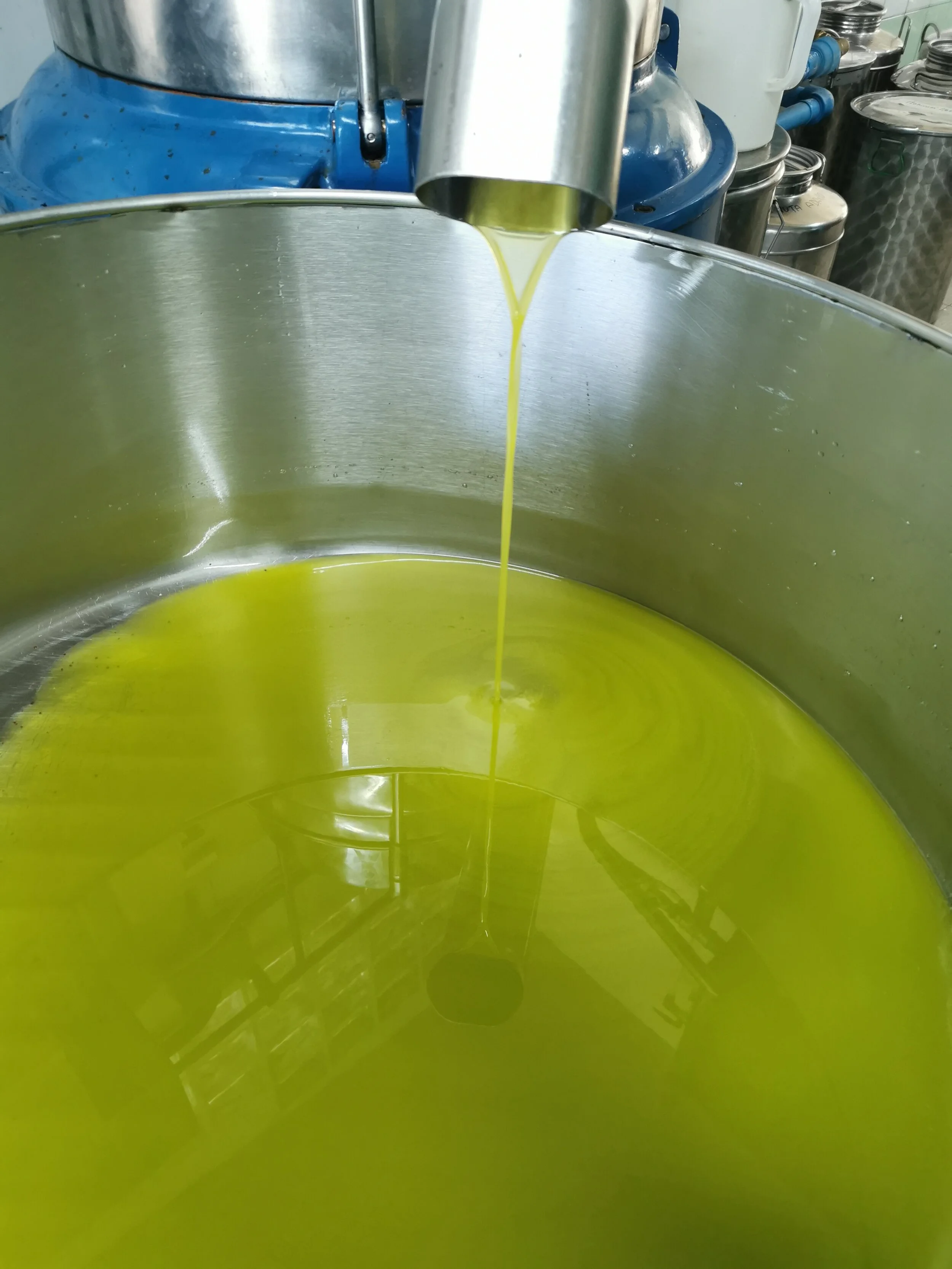
The olives go into the machinery where you watch them get washed while the leaves and branches are separated out. Next, they are emptied into the stone mill where a giant round stone rolls around and around, crushing the olives along with the pits. Once the olives are properly squished, the paste is poured onto porous trays that are stacked into a pressure machine which presses the liquid out. This liquid contains both oil and water which then goes through a centrifuge to separate them. The pinnacle of the experience is watching your oil slowly stream out of this last bit of machinery into your stainless steel container. The color is green/dark yellow and you wait patiently to see how many liters will result. This is your oil for the year, so you hope for a good amount! Also, the final product lets you calculate your percent yield which gives you bragging rites for the rest of the year!

Giant stone for mashing the olives at the olive mill
Once you pay and load your precious Extra Virgin Olive Oil into the car, you have to make a trip to the bakery along the route home. A big, crusty loaf of Tuscan white bread is a must to sample the new oil…well, by sample I mean open up a bottle of Chianti and make a meal of it!

One minute after getting home from the olive mill
A toast to the harvest…Salute!